Please select your country using the country selector in the top-left corner.
Please select your country from the menu.
Two names, one confusion
Macaron vs Macaroon
Two desserts, one name that keeps causing confusion. At Ladurée, we've been making the French almond macaron for generations, so this is a question we're happy to settle once and for all.
THE KEY DIFFERENCES
BASE INGREDIENT
The macaron is built on ground almonds. The macaroon is built on grated coconut.
STRUCTURE
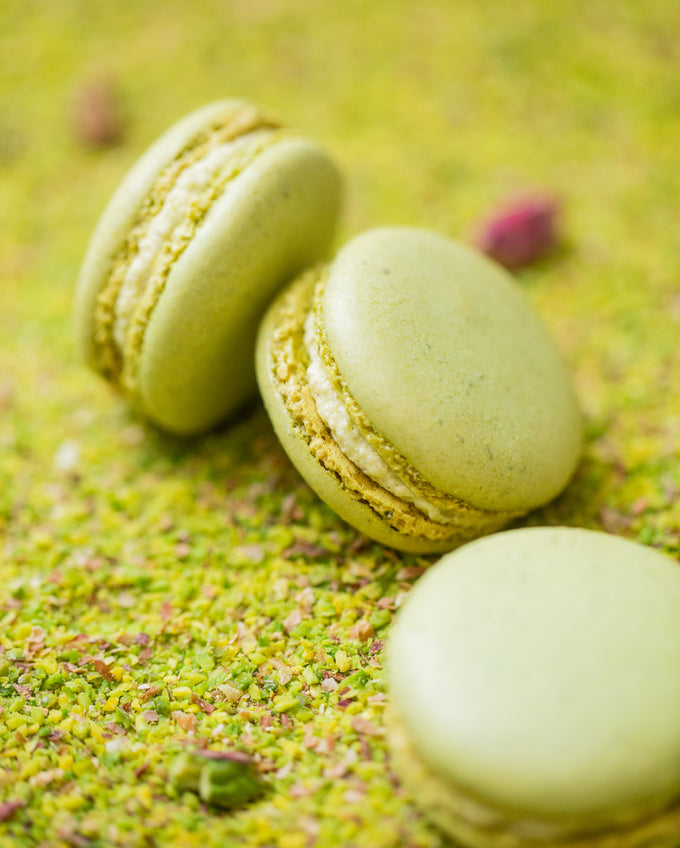
The macaron is made of two shells joined by a filling. The macaroon is a single mound, with nothing inside.
TEXTURE
The macaron offers a crisp shell around a soft centre. The macaroon is chewy all the way through.
ORIGIN
The macaron was refined in Parisian pâtisseries. The macaroon was popularised largely in the United States.
SIGNATURE DETAIL
The macaron is known for its "pied," the ruffled foot that forms at the base of the shell. The macaroon is known for its golden, slightly craggy surface.
The French original
WHAT MAKES A MACARON A MACARON
A macaron is really more of an assembly than a single recipe. Two almond meringue shells are baked separately, then brought together around a filling once they’ve cooled. Most recipes call for a short resting period afterwards, which allows the filling to soften the inside of the shells just slightly, so the finished macaron gives you both textures at once: a shell that yields with a light crack, and a centre that’s tender to the point of almost melting.
None of this is particularly forgiving. The meringue has to be folded into the almond base with a precise touch, since folding too little can leave the shells prone to cracking in the oven, while folding too much causes them to spread and lose their shape. Oven humidity, resting time, piping consistency: small details, but they all show up in the finished shell, right down to whether that little ruffled foot forms cleanly at the base.
At Ladurée, the double-shelled macaron filled with a delicate cream is part of the House’s heritage. In the mid-20th century, Pierre Desfontaines, Louis-Ernest Ladurée’s younger cousin, is credited with bringing two almond shells together around a filling, creating the distinctive format that has since become synonymous with the macaron as we know it today.
A shared root
WHY THE NAMES SOUND SO ALIKE
It isn't a coincidence, and it isn't a translation mistake either. Both words trace back to the Italian maccarone or maccherone, an old term for a fine almond paste that's also an ancestor of the modern French macaron. From there, French kept "macaron" for the almond pastry that Parisian pâtissiers went on to refine over the following centuries. English speakers, meanwhile, started using "macaroon" for a coconut-based cookie that took its own path, particularly in American home baking. Same root, different destinations. By the time each dessert settled into the form we know today, there wasn't much overlap left beyond the name.
Our craft
WHERE LADURÉE COMES IN
Ladurée works only with the French almond macaron: two delicate shells, a carefully balanced filling, and a range of flavours and colours that has grown from timeless classics into seasonal creations over the years. Every batch follows the same principles the house has relied on since it started making macarons this way, from the almond meringue through to the final assembly.
Behind every shell lies a century of savoir-faire: a precise craft, a signature texture, and a story deeply woven into the history of the House. Discover what makes the Ladurée macaron a creation of its own.
No. A macaron is made from almond flour and consists of two shells joined by a filling. A macaroon is a coconut-based cookie that's denser and chewier, and typically made without any filling.
They both come from the Italian word for almond paste, maccarone. French kept the term for the almond pastry, while English later attached "macaroon" to the coconut version.
Generally, yes. A macaron demands precise technique at every stage, from the meringue to the folding to the baking, while a macaroon is a simpler recipe that leaves more room for error.
No. When it comes to macarons, Ladurée focuses solely on the French almond version, across its own range of flavours and colours. Coconut macaroons are not part of the house's creations.
Home delivery
In France and Europe. Free over 75€ in Métropolitain France (see conditions).
Cold Chain
Orders shipped fresh the day before the delivery.
Protected products
Packaging made from recyclable materials for perfect preservation and protection.
Customer service
Monday to Friday, from 9 a.m to 5 p.m by :
- Mail to contact@laduree.com
- Form on our website